Whole-House Fans vs. AC: Which Cooling Solution is Best?
Are you tired of sweating through summer nights, but dreading sky-high energy bills? If you’re looking for a better way to keep your home comfortable, you’re not alone. At Urban Cooling Services, we know the struggle—balancing comfort, cost, and energy use is tough.
Should you stick with your trusty air conditioner or try a whole-house fan? Each system has its strengths, quirks, and ideal uses. Let’s break down how they work, what they cost, and which is right for your home, so you can breathe easier—literally.
How Whole-House Fans Work 🌀
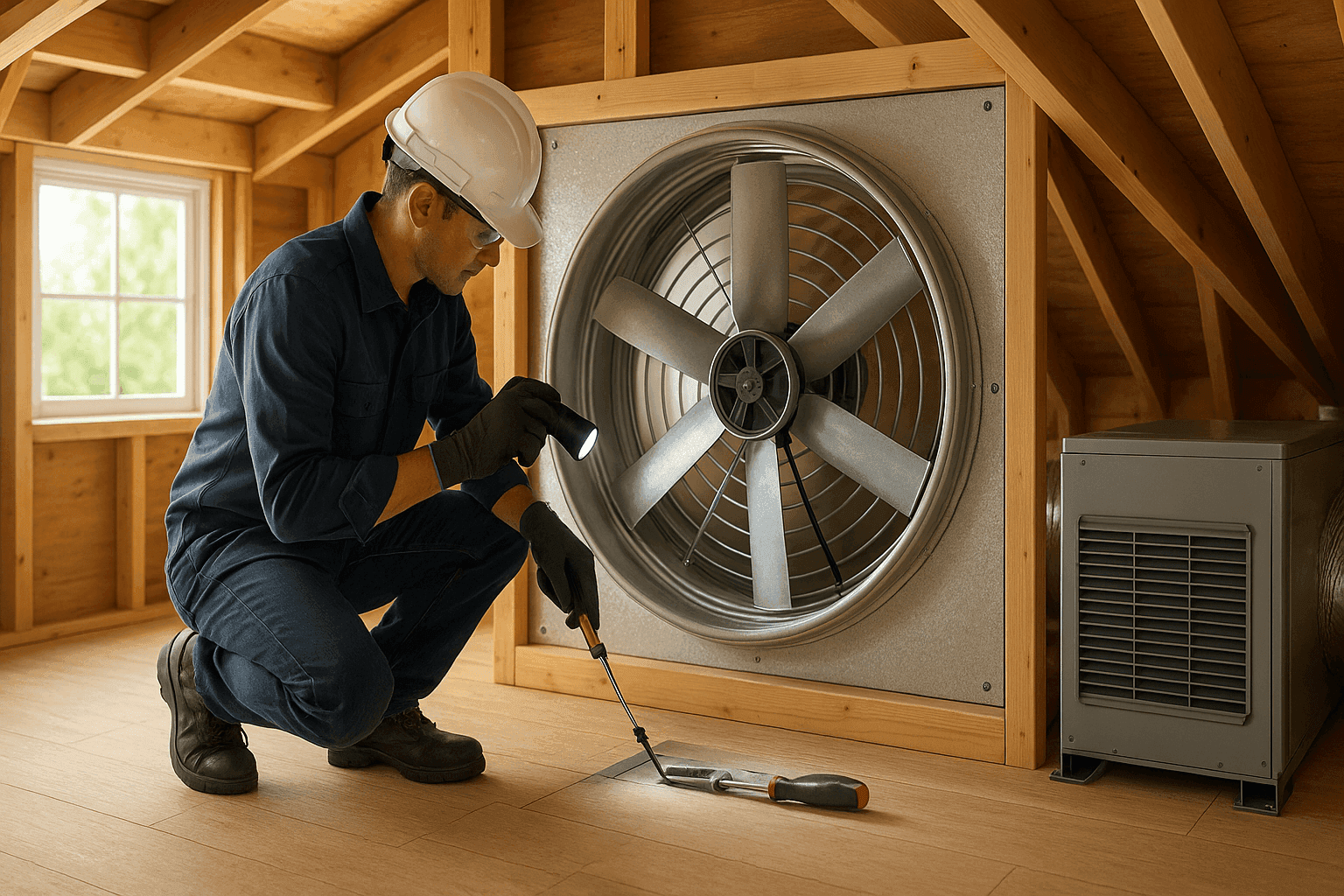
Whole-house fans are like your home’s lungs. They pull cool outdoor air in through open windows and push out hot indoor air through attic vents. This creates a breeze that feels instantly refreshing.
Here’s how it plays out in real life:
- You open windows in the cool evening or early morning.
- Flip on the fan, usually installed in your hallway ceiling.
- Cool air sweeps through, flushing out heat and stuffiness.
- The attic gets warm, but the living space cools quickly.
It’s not magic. It’s airflow—simple, effective, and age-old. According to the U.S. Department of Energy, whole-house fans can reduce indoor temperatures by up to 10 degrees in suitable climates.
But there’s a catch: these fans work best when the air outside is cooler than inside. On muggy, hot nights, they can’t perform miracles.
How Air Conditioning Systems Work
Air conditioning is the classic “set it and forget it” solution. It chills your home with cooled, dehumidified air, even when it’s scorchingly hot outside. Modern systems use refrigerant and compressors to move heat out of your home and pump cool air in, all controlled by a thermostat.
The result? Consistent, precise indoor temperatures—no matter what’s happening outside.
Pros and Cons of Each System
No cooling solution is perfect. Here’s a real-world look at what you can expect:
Whole-House Fans
Pros:
- Low operating costs—uses a fraction of the energy an AC needs.
- Fast air changes—flushes out heat and stuffy air quickly.
- Improves indoor air quality by replacing old air with fresh.
- Easier to install than a full HVAC system.
Cons:
- Relies on outdoor air being cooler than indoors.
- Doesn’t dehumidify—can make muggy nights feel worse.
- Noisy at higher speeds.
- Not effective on extreme heat days or in very humid regions.
Air Conditioning
Pros:
- Cools and dehumidifies—no matter what’s happening outside.
- Precise temperature control.
- Quiet, especially with modern, well-maintained systems.
- Works in all climates, even high humidity.
Cons:
- Higher upfront and operating costs.
- Bigger carbon footprint if not paired with efficient practices.
- Needs regular maintenance (filters, coils, refrigerant checks).
Climate and Home Considerations
Not all homes, or climates, are created equal. Here’s what to keep in mind:
- Mild, dry evenings: Whole-house fans shine here. They work best in regions where temperatures drop at night—think coastal or mountain areas.
- High humidity: AC wins hands down. Dehumidifiers near you can help, but only AC systems actively remove moisture.
- Sealed homes: If your home is tightly insulated, an air conditioner may be the smarter investment. Whole-house fans need windows cracked open to work.
- Allergy sufferers: AC, especially with good filters or air scrubbers, will trap more pollen, dust, and pollutants. Whole-house fans can pull in outdoor allergens.
Cost and Energy Efficiency
Let’s talk numbers. While every home is different, some patterns hold true:
Installation Costs
- Whole-house fan: Generally $1,000–$2,500, including installation and attic venting.
- AC system: Central air runs $5,000–$10,000 for installation, depending on size, efficiency, and ductwork.
Operating Costs
- Whole-house fan: Uses 90% less electricity than central AC. That’s pennies per hour.
- AC: Higher energy use, especially during peak heat.
- Tip: Pairing a fan with AC can help save—use the fan to cool things down at night, then set your AC higher during the day.
Maintenance
Both systems need care:
- Whole-house fans: Check motor, belt, and attic venting annually.
- AC systems: Routine HVAC maintenance (filters, coils, refrigerant levels, thermostat calibration).
For safety and performance, the U.S. Environmental Protection Agency recommends annual HVAC maintenance, regardless of which system you choose.
Installation and Practical Tips
Thinking about adding or upgrading a cooling system? Here’s what to consider:
Whole-House Fan:
- Needs attic venting—without it, you risk heat buildup and possible attic damage.
- Check your home’s electrical panel for capacity.
- Doors and windows must be opened for best results.
- Professional installation is safest for wiring and venting.
Air Conditioning:
- Ductwork condition is key—leaky ducts waste energy.
- Modern thermostats help save energy (smart thermostats are worth considering).
- AC units should be sized correctly for your home—too big or too small reduces efficiency and comfort.
- Consider indoor air quality add-ons: dehumidifiers, filters, and air scrubbers.
Maximizing Comfort While Managing Costs
- Use whole-house fans during cooler evenings or early mornings, then shut windows and blinds during the day to trap the cool air.
- Set your thermostat a few degrees higher and use ceiling fans to circulate air.
- Schedule annual home energy audits to spot leaks, duct issues, or insulation gaps.
- Change filters regularly—whether you rely on a fan or AC, clean filters improve efficiency.
When Should You Choose Each System?
- Whole-house fan: If you live in a dry climate with cool nights and want low-cost, eco-friendly cooling.
- Air conditioning: If you need round-the-clock comfort, live in a hot/humid area, or have health concerns that require strict temperature and humidity control.
- Both: Many homeowners use a hybrid approach—fan for spring and fall, AC for peak summer, maximizing comfort and savings.
Realistic Expectations
Neither system will make your home feel like a mountain retreat if it’s 95°F and humid outside. But with the right setup and habits, you can stay cool and keep costs in check.
FAQ
Is a whole-house fan enough to cool my home in summer?
In many regions, yes—especially if nights are cool. But in extreme heat or humidity, you’ll likely want AC as backup.
Will a whole-house fan improve indoor air quality?
Yes, by exchanging stale air for fresh. But if outdoor air quality is poor (pollen, smoke, pollution), you’ll want to use AC with good filters or air scrubbers.
Does using both systems make sense?
Absolutely. Many homeowners use a fan to pre-cool their home, then switch to AC during the hottest part of the day.
What about noise?
Whole-house fans can be noisy, but modern models are quieter than older ones. AC systems are usually quieter, especially ductless mini-splits.
Local and Seasonal Considerations 🌡️
- Check local building codes before installing a whole-house fan—venting and electrical requirements matter.
- In wildfire-prone or high-pollen areas, AC is safer for indoor air quality.
- If you’re considering backup power, generator installation ensures your cooling keeps running during outages.
- Seasonal maintenance is key. Schedule filter changes, HVAC or fan tune-ups, and duct cleaning before the heat hits.
For more on safety and efficiency, consult resources like the U.S. Department of Energy and the EPA’s indoor air quality guidelines.
Finding the perfect cooling system doesn’t have to be overwhelming. Whether you’re leaning toward a whole-house fan, AC, or a blend of both, Urban Cooling Services can help you weigh your options, plan the best solution, and keep your home comfortable year-round.
Call Urban Cooling Services now — or reach us anytime at 844-484-9744 .